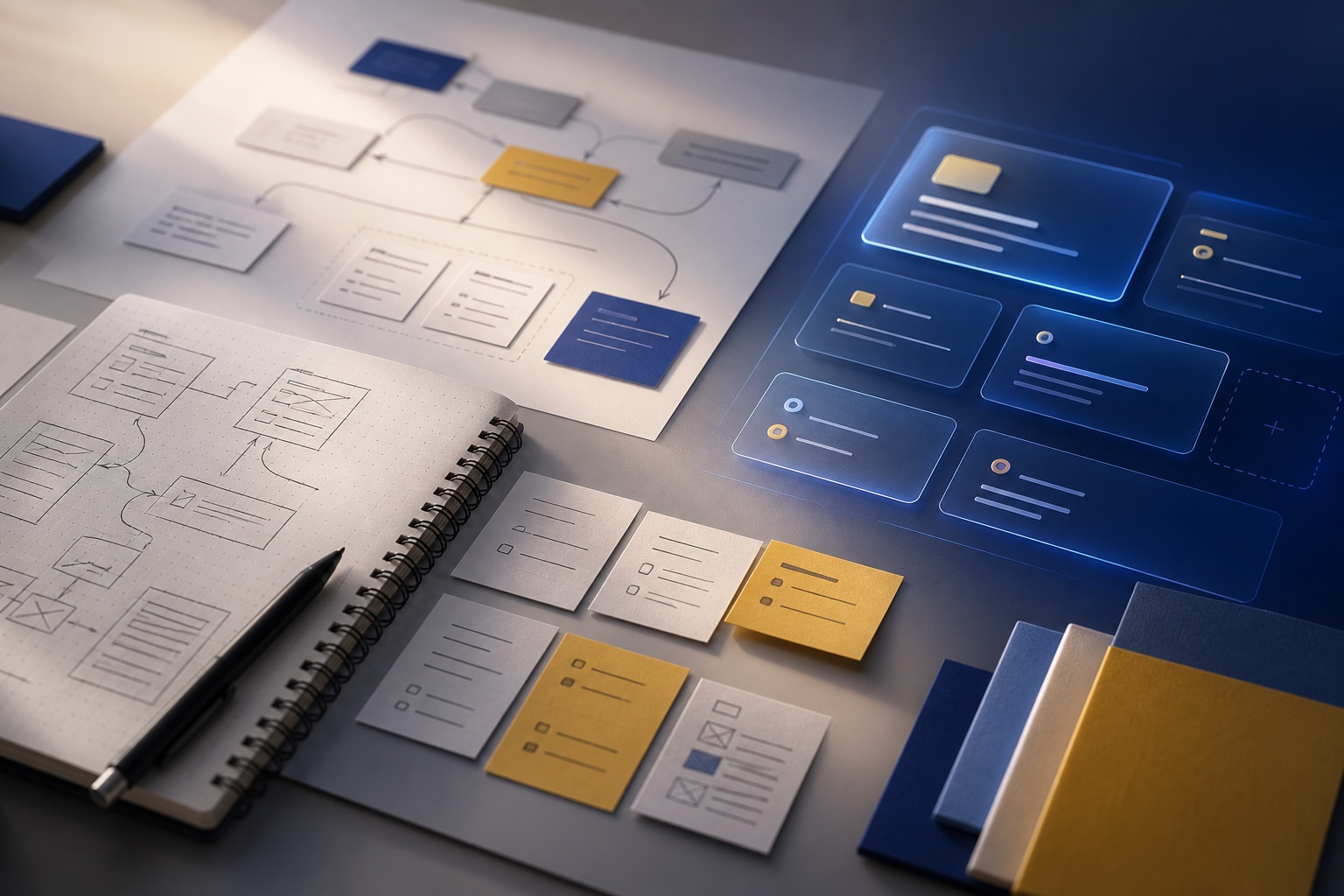
Before UI
Scope before screens
We pin down the user flow and release boundary before the UI pretends everything is solved.


About Enveir
Most projects stall when the brief jumps from strategy to screens too fast. We map the workflow before the first screen, then build against that map.

No guessing in week one.
The first pass names what needs to be built, what is still unknown, and who has to decide.
Before UI
We pin down the user flow and release boundary before the UI pretends everything is solved.
While shaping
We pressure-test the layout against data shape and CMS needs while the idea is still cheap to change.
After handoff
You get decisions your team can pick up later, not a folder of exports nobody wants to touch.
How we work
You should know what we are deciding this week, what is blocked, and what will be shown next. That keeps the work from turning into vague progress updates.
Before colors or components, we name the job the product has to do. For example: replace a three-tab approval spreadsheet with one screen.
If a flow can confuse the buyer or the operator, we sketch it before anyone budgets a full build.
Dashboards and forms are used between calls, invoices, and Slack messages. The interface has to survive that.
We share rough states early, including the awkward questions. It is cheaper than polishing the wrong thing.
How the work moves
The shape is simple. We agree on the workflow, turn the risky parts into screens, then build the version worth testing.

We write down who does what, where the data comes from, and where the process breaks.
We choose the key flow and release line before polishing UI.
We build with the real constraints in mind: content, CMS, devices, and the team that maintains it.
When sales, operators, or users react, we decide what changes now and what waits.
What we can take on